

Our grantee partners are leading a powerful, global movement to codify gender apartheid and seek justice for girls and women in Afghanistan.
From London to Kabul to Geneva, Afghan women are urging the global community to recognise that gender apartheid is not just a crisis contained to Afghanistan — it’s a global warning. They are campaigning to codify gender apartheid as a crime under international law, not only to hold the Taliban accountable, but to prevent future violations of girls and women’s rights everywhere.
Over the last few months, our partners have highlighted the role of Afghan women journalists, launched a landmark report at the U.N. Human Rights Council and brought together global advocates to build momentum behind the legal recognition of gender apartheid. Malala also joined them, lending her voice and platform to amplify their cause.
Supporting Afghan women journalists on the frontlines

In May, Rukhshana Media hosted its first major event in London to mark World Press Freedom Day and spotlight the crucial work of women journalists reporting from Afghanistan. Sky News presenter Yalda Hakim moderated the discussion with Malala; Sahar Halaimzai, Senior Director of our Afghanistan Initiative; and Zahra Joya, founder of Rukhshana Media.
“My colleagues, they are working independently, and [bringing] first-hand information from inside. It's really hard. It's a risky job,” said Zahra. “[They’re] taking their lives in their hands to gather information.”
Nearly 100 human rights activists and journalists attended the event, where the panellists drew attention to the urgent need to legally recognise gender apartheid and support credible, independent outlets like Rukhshana Media, one of the few telling the stories of Afghan girls and women.
“We need to use everything in our capacity to support Afghan women journalists. We need to share their stories. We need to support the work that they're doing on the ground,” said Malala.
Calling for global action at the U.N.
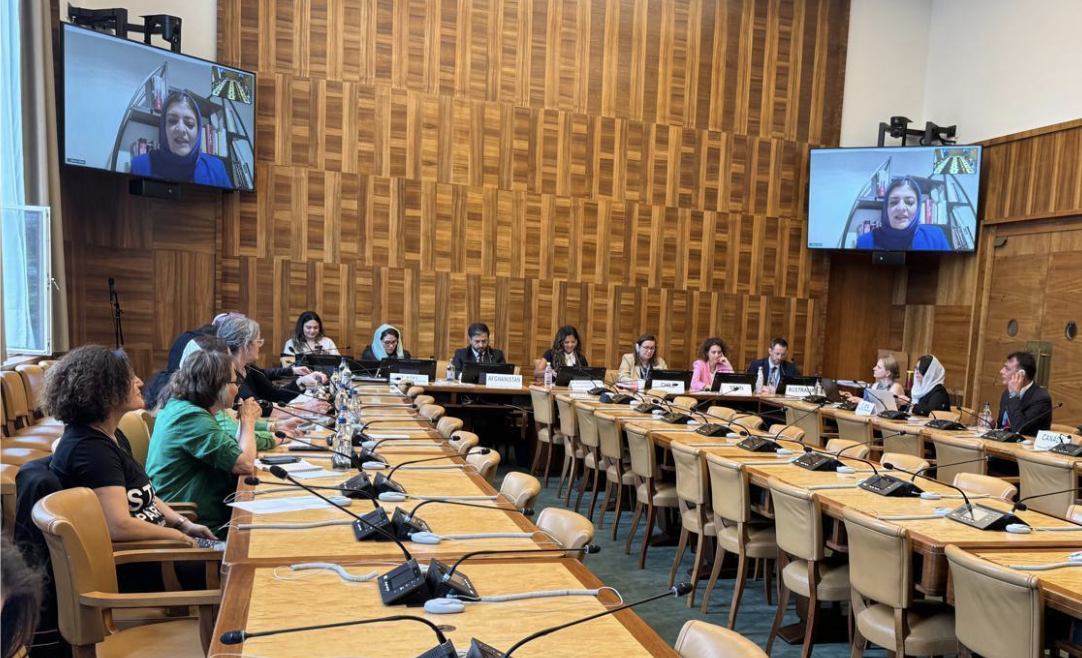
In June, Women and Children Research and Advocacy Network (WCRAN) launched its new report “The Impact of the Taliban’s Edict on Women and Girls in Afghanistan” at a side event at the U.N. Human Rights Council session in Geneva. The report paints a bleak picture of life under Taliban rule, but it also lays out a path for U.N. member states to advance accountability and justice efforts. Representatives from the U.N. Permanent Missions of Australia, Canada, Chile and Spain co-hosted in a show of international support.
“[Our values] is why we stand with Afghan women and Afghan people today,” said Ambassador Claudia Fuentes Julio from Chile. “The fight for gender justice in Afghanistan must not be silent.”
WCRAN’s findings — based on surveys of 600 Afghan women and girls and interviews with experts, activists and political leaders — found that:
94.1% had one or more family members being deprived of education.
91.6% had no access to work
7% had personally experienced violence, and 56.4% had witnessed it firsthand.
Taliban edicts were cited as the primary cause of gender-based violence to (77.8%), followed by unemployment (50%), poverty (49%), family issues (34.3%) and harmful customs (32.2%).
The event preceded the U.N. Committee on the Elimination of Discrimination Against Women’s (CEDAW) 91st session, which formally reviewed Afghanistan’s record on women’s rights — giving civil society a platform to raise urgent concerns.
"Let us make this moment one of shared purpose, where our collective voices rise in defense of human rights, equality and dignity,” said Zarqa Yaftali, founder of WCRAN, at the event. “Let us match our words with legal action, diplomatic pressure, humanitarian support and unwavering solidarity."
Uniting against gender apartheid
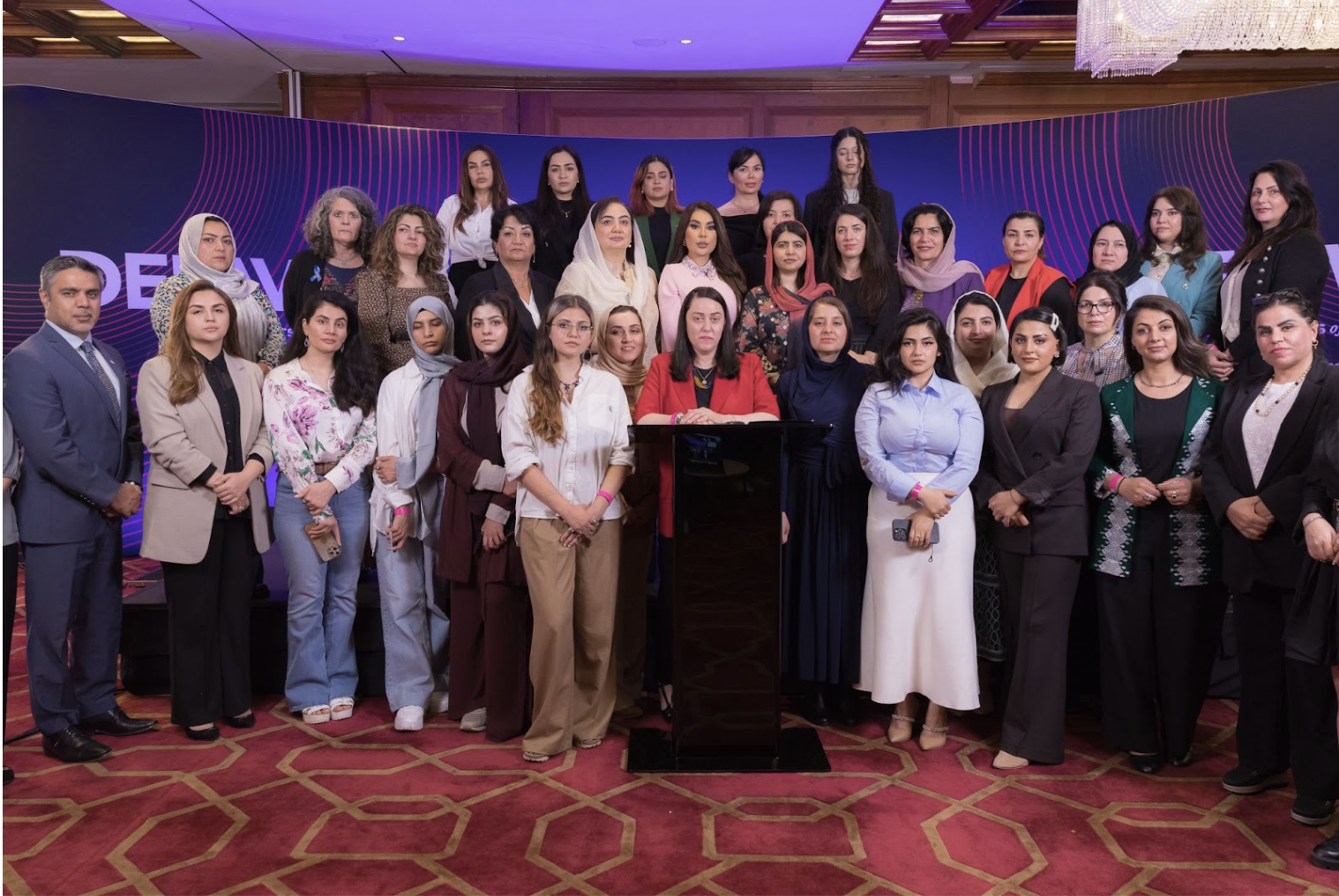
On June 25, Malala and Sahar joined Aryana Sayeed, Afghan singer and activist, and more than 50 Afghan advocates at a London conference hosted by Defenders of Equality, Freedom and Advancement for Women (DEFAW). Malala teaming up with Aryana, one of Afghanistan’s most well-known artists and founder of DEFAW, to call for global action to end gender apartheid served as a powerful example of the movement’s broad, global reach.
“We've seen this before from racial apartheid in South Africa to Palestine to Afghanistan. We've seen how systems of domination operate. We've seen how they use the law, institutions, how they silence entire populations and why that works,” said Sahar during the closing panel. “And so calling it apartheid, we're saying what is happening to Afghan women and girls is systemic. And so the response needs to be systemic too.”
Malala challenged global leaders to:
Share their solidarity with Afghan women.
Work to codify gender apartheid in the U.N.’s Crimes Against Humanity treaty.
Put women’s rights on the agenda when discussing the future of Afghanistan.
Include women in decision-making about their futures.
The long road to justice
As the U.N. Sixth Committee kicks off the three year-long process to negotiate a Crimes Against Humanity treaty in January 2026, Malala Fund will be proudly supporting and advocating alongside this determined group of Afghan women to codify gender apartheid in that treaty.
In a video message to the DEFAW conference, one Afghan girl shared: “My message is simple: please don't forget us….I don't want to grow up and tell my children I never got to finish school. I want to tell them I fought for my education.”
Through the long road ahead, we are united in our fight for the future of Afghan girls — one where they can live freely, pursue their education and reach their full potential.
